NEWS • 2026-05-03
New grant to improve access to safe drinking water in South Asia
Beijer Institute economist Anna Tompsett and partners in Bangladesh and India have received a SEK 6 million grant for a project aimed at increasing access to safe drinking water in South Asia. The team will investigate how best to achieve this by both building new piped water systems and improving existing ones, testing different management practices.
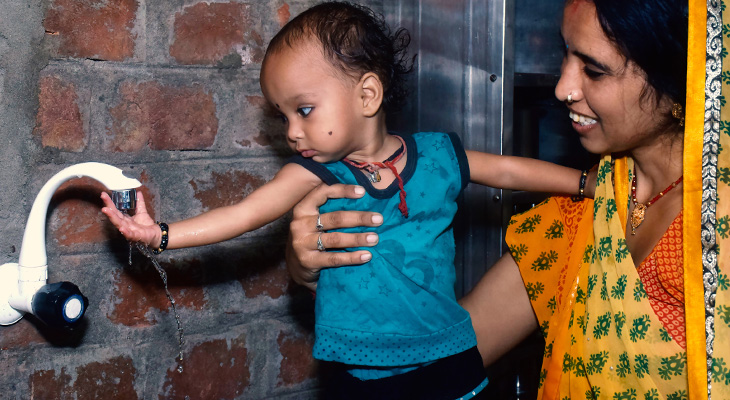
Photo:IStock
Billions lack safe water, despite technological advances
Today, more than 2 billion people lack safe drinking water. Shared water sources, still the only option for many rural and low-income urban communities, are at risk of contamination both at the source and when water is carried home or stored. As a result, many governments and international organisations are increasing investments in piped water systems.
“Safe drinking water is within reach for far more people than currently have it,” says Anna Tompsett. “Advances in technology and broader development have created a real opportunity: in some places to build new systems, in others to make existing ones deliver on their promise.”
However, water in many pipelines is contaminated, and poor maintenance can lead to unreliable performance. At the same time, some systems do succeed and provide safe water for many years. Surprisingly little is known with certainty about which management and organisational practices improve outcomes.
This new project, funded by the Swedish Research Council for Sustainable Development (Formas) aims to address that gap. It will be carried out in partnership with NGO Forum for Public Health in Bangladesh, where project member is Md. Ahasan Habib,and with J-PAL South Asia in India. Associate Professor Namrata Kala, MIT Sloan, is also member of the project team.
Finding out why some pipelines succeed while others fail
The team will run a series of field experiments in Bangladesh and India to learn how to better manage rural water systems, building on 18 years of collaboration on safe drinking water projects in Bangladesh and on two years of preliminary fieldwork and data collection in India.
In Bangladesh, they will build new piped drinking water systems, working with a local organisation to design a sustainable way to install, run, and maintain pipelines, and to see how well they can deliver safe water under ideal conditions.
In India, they will study existing systems. First, by assessing how they are currently managed and perform and then by introducing changes that give more autonomy to local communities and aim to improve accountability and decision-making. This includes training and reconstituting village water and sanitation committees and delegating explicit responsibilities to manage funds raised from water fees.
Moving forward on clean water goals
“This grant lets us run the experiments needed to make progress on understanding how to get these systems to work and keep working, in partnership with NGOs, communities in Bangladesh, and government partners in India,” says Tompsett and concludes: “We are hopeful that what we learn can help translate potential into real, lasting progress with the overarching goal to help establish the most cost-effective and sustainable way to ensure safe drinking water for everyone in South Asia, and ultimately around the world.”
NEWS